
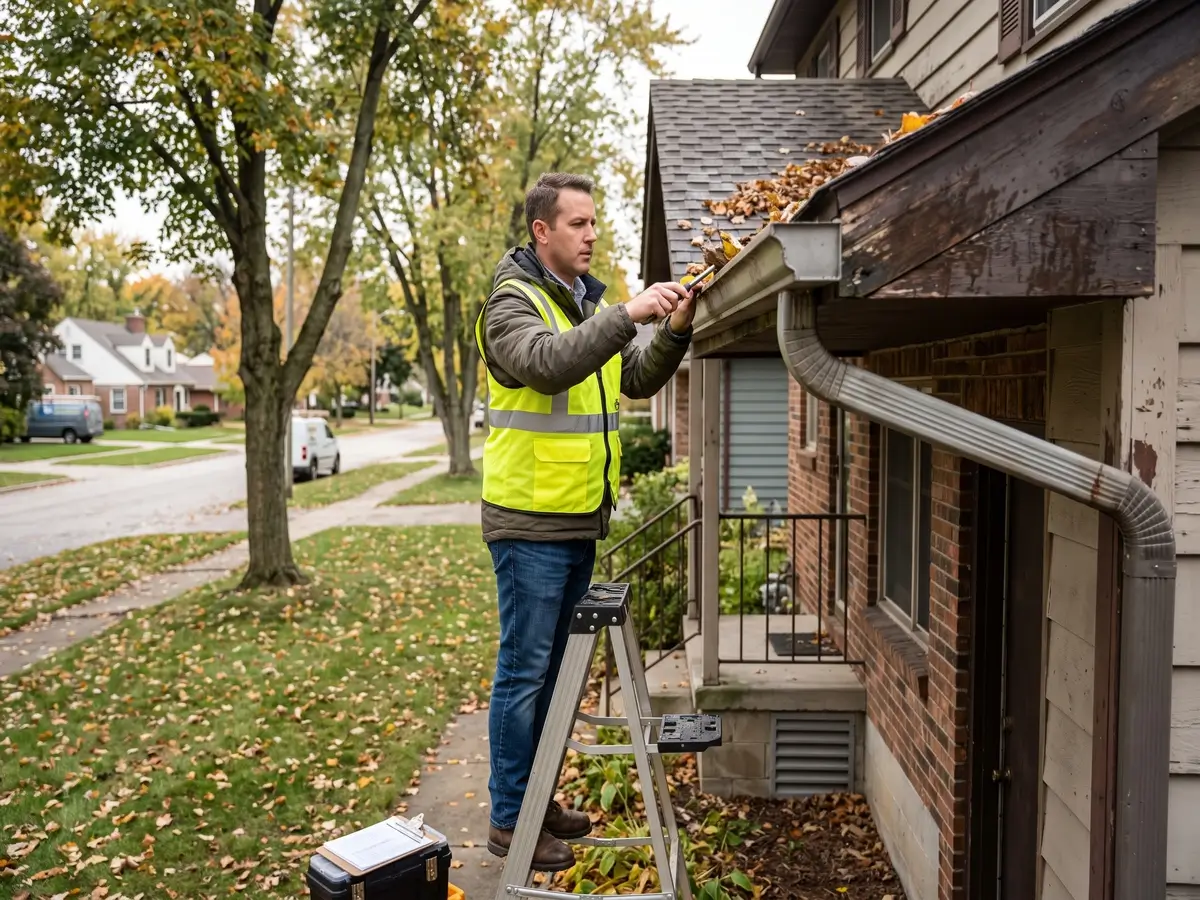
What a $200 Fix Costs When Nobody Looks Until It's a $2,000 Problem
A leaking gutter rarely announces itself. It quietly soaks into fascia boards for months until a tenant calls about a stain spreading across the ceiling. By then, what could have been a $200 repair has become a $2,000 replacement, and the invoice lands squarely on the owner.
The gap between landlords who absorb these costs and those who avoid them almost always comes down to one habit: a consistent inspection calendar.
This guide breaks down exactly which inspections matter for Fredericksburg-area rentals, when to schedule them, and why timing protects both your property and your bottom line.
Key Takeaways
Move-in inspections create the legal baseline that every future wear-and-tear or damage decision depends on.
Quarterly seasonal walkthroughs catch small mechanical and structural issues before they turn into expensive emergency repairs.
Move-out inspections only hold up when they're compared against thorough move-in documentation, protecting owners from disputed deposit claims.
Virginia law requires at least 72 hours' notice before routine entry, so the calendar has to be built around legal timing, not convenience.
A managed inspection schedule keeps running even when owners are traveling, out of state, or simply busy, which is where professional oversight earns its keep.
Why an Inspection Calendar Is the Backbone of Profitable Property Management
Most landlords don't lose money in one dramatic moment. They lose it gradually: a slow leak here, a clogged dryer vent there, a worn seal around a tub that goes unnoticed until the subfloor underneath starts to give.
A consistent inspection calendar is what catches these small problems while they're still small, turning what could become a major repair into a quick, affordable fix.
Why This Matters for Fredericksburg Properties
Fredericksburg is home to a real mix of properties: older homes downtown, newer builds out in Stafford and Spotsylvania, and plenty of houses with crawl spaces or well systems that need their own kind of attention. A one-size-fits-all checklist doesn't hold up here.
The inspections that actually protect your property are the ones built around how your home is put together, so nothing gets missed when the seasons change.
A Familiar Scenario
Picture two owners with the same HVAC issue. One skips inspections for a year and only finds out about the problem when a stain spreads across the ceiling below it. The other is on a quarterly schedule and catches it within weeks, for a few hundred dollars and no drama. Same issue, two very different outcomes.
The Move-In Inspection: Your Documentation Baseline
Everything starts here. A thorough move-in inspection, backed by clear photos and a signed condition report, is the one document that will matter most if a deposit disagreement ever comes up down the road.
What to Document
Walk through every room and photograph the details: flooring, walls, cabinetry, appliances, and anything already showing wear. Confirm smoke detectors are working, test the HVAC, and check water pressure. This baseline is what makes the difference between a fair, defensible deduction and an argument nobody wins, and it's the foundation for judging normal wear and tear versus real tenant damage later on.
The Quarterly Walkthrough Schedule
Seasonal check-ins are where most owners fall behind, usually because life gets busy and "I'll get to it next month" quietly turns into six months. A simple quarterly rhythm keeps you ahead of your property instead of reacting to it.
Spring Inspection
Check the roof and gutters after a rough winter, test outdoor faucets and irrigation lines, and look for any signs that pests have found their way in as the weather warms up.
Summer Inspection
Make sure the HVAC system is actually keeping up before the real heat arrives, check attic ventilation, and look for moisture around window units or crawl spaces.
Fall Inspection
Clear the gutters again before leaves pile up, get the furnace serviced ahead of the first cold snap, and check the weatherstripping on doors and windows.
Winter Inspection
Confirm pipes are insulated in unheated areas, make sure the water heater is running efficiently, and watch for any risk of ice dams along the roofline.
The Move-Out Inspection: Where Documentation Pays Off
A move-out inspection is only as reliable as the move-in inspection sitting next to it. Without that starting point, there's no real way to know what existed before a resident ever moved in.
Normal Wear and Tear vs. Tenant Damage
Virginia law draws a clear line here, and that line decides what can and can't come out of a security deposit. Faded paint or worn carpet in a busy hallway is ordinary wear. A pet-stained subfloor or a broken window is damage. Solid photo documentation at every stage is what turns that distinction into something clear and defensible, instead of a back-and-forth argument.
Notice Requirements: What Virginia Law Says About Entering a Rental
An inspection calendar only works if it respects the law it's operating under. Virginia generally requires landlords to give tenants at least 72 hours' notice before entering for routine, non-emergency maintenance, and that work has to be completed within 14 days of the notice.
Building your seasonal schedule around this rule, rather than around it, keeps everything compliant and keeps trust with your residents intact.
How GEM Realty Group Keeps the Calendar on Track
Managing one rental on this kind of schedule is manageable. Managing several, especially from out of state or around a full-time job, is a different story.
GEM Realty's maintenance services build move-in, seasonal, and move-out inspections into one ongoing schedule, with every bit of documentation stored and easy to find through the owner portal. Backed by our service guarantees, it's not just a plan sitting on paper. It's a system that keeps running, whether or not you have the time to think about it yourself.
FAQs
How often should a landlord inspect a rental property in Fredericksburg?
Most owners benefit from a move-in inspection, four seasonal walkthroughs per year, and a move-out inspection. Properties with older systems or known maintenance issues may warrant more frequent checks.
Can a landlord in Virginia inspect a rental without notice?
Except in a genuine emergency, Virginia law requires landlords to give tenants notice before entering, with at least 72 hours' notice specifically required for routine, unrequested maintenance.
What happens if move-in and move-out inspections don't match up?
Without matching documentation, owners have little ground to stand on if a resident disputes a deposit deduction, which is why consistent photo records at every stage matter as much as the inspection itself.
Small Habits Protect Big Investments
A rental property rarely fails all at once. It slips one skipped inspection at a time, until small issues turn into expensive ones and missing documentation turns into disputes nobody wins. A consistent inspection calendar is one of the simplest ways to protect your Fredericksburg rental's condition, value, and resident relationships, all in one system.
You don't have to be the one tracking every season, every walkthrough, and every photo. GEM Realty Group builds that calendar and runs it for you, so nothing slips through the cracks while your property keeps performing.
Call 540.940.6440 or contact us today to schedule your free consultation and put a real system behind your investment.