

You get the keys back and step into your Fredericksburg rental expecting a routine turnover. At first glance, it’s fine. Then your eyes adjust: the paint looks dull, the carpet has a worn path, and a cabinet hinge wobbles.
And there it is, the surprise behind the TV, a fist-sized hole that changes the whole conversation. Now you’re not just cleaning up. You’re deciding what’s normal living and what’s damage you can legally charge back.
In Virginia, that line matters, and the clock starts fast. This visual guide helps you call it confidently and fairly.
Key Takeaways:
- Wear and tear is expected aging from ordinary use, while chargeable damage comes from negligence, misuse, or lease violations.
- Virginia allows deposit deductions for tenant-caused damages, but reasonable wear and tear is not chargeable.
- Landlords must send an itemized statement and any remaining deposit within 45 days after the later of lease end or vacancy.
- Photos, checklists, and consistent standards reduce disputes and support your deductions.
Virginia Security Deposit Rules at a Glance
In Virginia, the security deposit can’t be more than two months’ rent. After a tenant moves out, you may use the deposit to cover unpaid rent and repairs for tenant-caused damage, but not normal wear and tear.
You must also send the tenant a written, itemized list of what you charged for and return any remaining money within 45 days after the later of the lease ending or the tenant fully moving out.
The Visual Decision Ladder
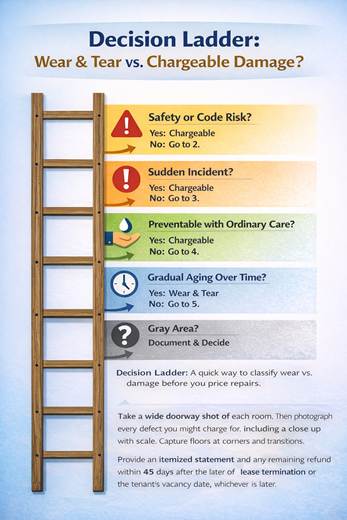
The Visual Decision Ladder graphic is a step-by-step checklist you can use the moment you spot an issue during a move-out inspection.
Start at the top and work your way down, answering each question in order. If the answer is “Yes” to safety or code risk, a sudden incident, or something that could have been prevented with ordinary care, it usually points toward chargeable damage.
If the issue looks like gradual aging that happens over time, it typically falls under normal wear and tear.
The last step, “Gray Area,” is for the situations that aren’t obvious. When you land there, the photo reminds you to pause and document before deciding. Compare move-in and move-out photos, take clear close-ups with scale, and choose the most reasonable repair approach rather than an upgrade.
At the bottom, the graphic reinforces two practical reminders: take wide doorway shots and close-ups for anything you might charge for, and provide an itemized statement with any remaining refund within the required timeframe.
Room by Room Visual Comparisons
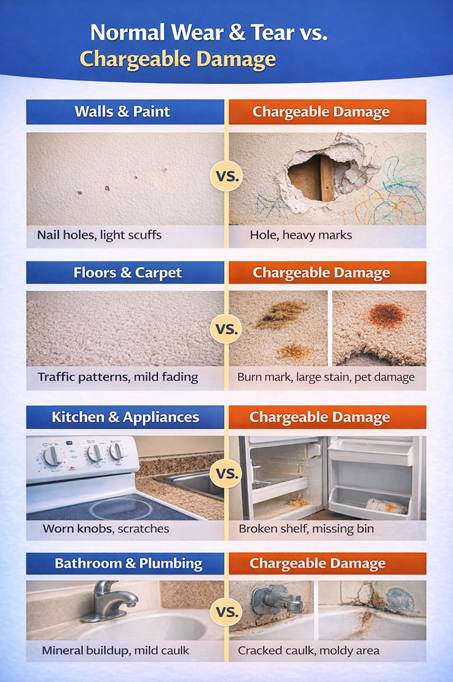
This Room-by-Room Visual Comparisons chart helps you “see” the difference between normal aging and chargeable damage at a glance.
Each section is set up as a side-by-side comparison: the left side shows what typically falls under wear and tear, and the right side shows examples that more often require repairs beyond routine maintenance. It’s designed to keep your standards steady from one turnover to the next.
Look at each row as a quick checkpoint. Walls and paint focus on the difference between small, easy fixes and larger repairs.
Floors and carpet highlight how gradual wear over time differs from stains, burns, or pet damage that changes the condition of the material. Kitchen and appliance examples separate ordinary use from broken or missing components.
The bathroom row finishes the guide by showing how light aging differs from issues that point to neglect, especially when moisture is involved.
The Gray Area Zone
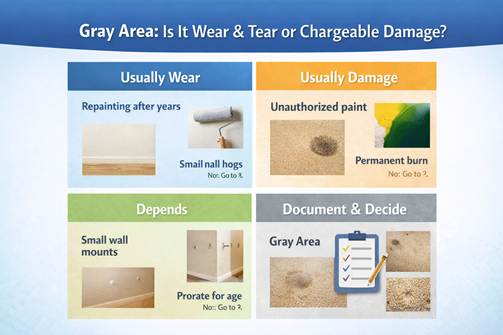
This Gray Area graphic is your reality check for the items that most often cause security deposit disputes. The “Usually Wear” side highlights the everyday, expected wear and tear that happens over time, like repainting after years of occupancy and tiny nail holes from hanging pictures.
Across from it, “Usually Damage” shows issues that typically point to misuse or carelessness, like unauthorized paint and a permanent carpet burn.
The bottom half is the heart of the guide. “Depends” acknowledges that some issues need context, especially when age is a factor or when a repair might be enough instead of replacement.
The “Document & Decide” section is the practical takeaway: when you’re not sure, let your photos, your move-in baseline, and a reasonable repair estimate guide the decision, and write down your reasoning so you can stand behind it later.
Photo Checklist
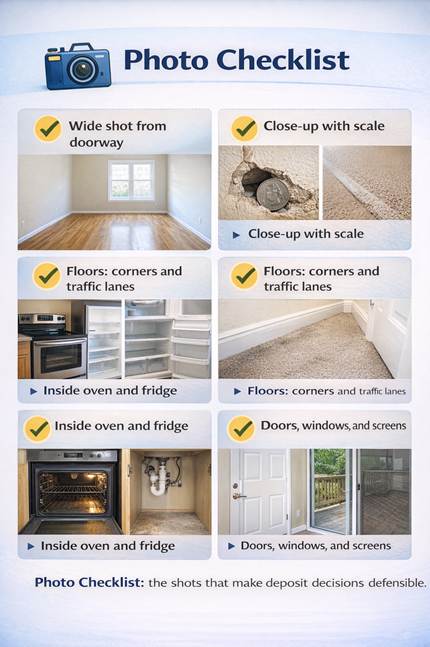
This Photo Checklist shows the exact shots to capture during move-in and move-out so your deposit decisions are easy to support. Take a wide doorway photo of each room, then close-ups of any defects with a coin or tape measure for scale.
Finish with problem-prone areas like floors at corners and traffic lanes, inside the oven and fridge, under sinks, and doors, windows, and screens.
Common Pricing Mistakes That Trigger Disputes
Most deposit fights come from two avoidable missteps. First, charging for a full replacement when a simple repair would fix the problem. If a wall only needs patching and touch-up paint, repainting the entire room can feel unfair.
Second, ignoring age. Even when damage is real, your charge should reflect what the item was worth at move-out, not the cost of something brand new.
Keep deductions itemized and tied to the actual repair, and include invoices or estimates so the numbers make sense.
FAQs
Can I charge for carpet replacement in Virginia?
Yes, if the carpet is damaged beyond reasonable wear and tear, such as burns, severe staining, or pet saturation that cannot be cleaned.
How long do I have to return the security deposit?
Provide an itemized statement and any remaining refund within 45 days after the later of lease termination or the tenant’s vacancy date.
What if a tenant disputes deductions?
Share move-in and move-out photos, checklists, and receipts. Many disputes are resolved when the timeline and conditions are clear.
The Finish Line: Fair Deductions, Faster Turnovers
Every rental shows its age. Paint fades, carpet wears down, and fixtures loosen, and none of that should turn into a tenant charge. What is chargeable is preventable damage, and the best way to handle it is with a clear system and solid proof.
Use the Decision Ladder to make the call, the room comparisons to stay consistent, the Gray Area guide to slow down when it’s tricky, and the Photo Checklist to document everything cleanly.
Ready to take the stress out of move-outs? Gem Realty Group helps Fredericksburg owners run inspections, repairs, and deposit accounting with a repeatable process that protects your property and your time. Reach out to us and make every turnover smoother!
Additional Resources
Rental Laws That Fredericksburg Landlords Need to Know in 2026